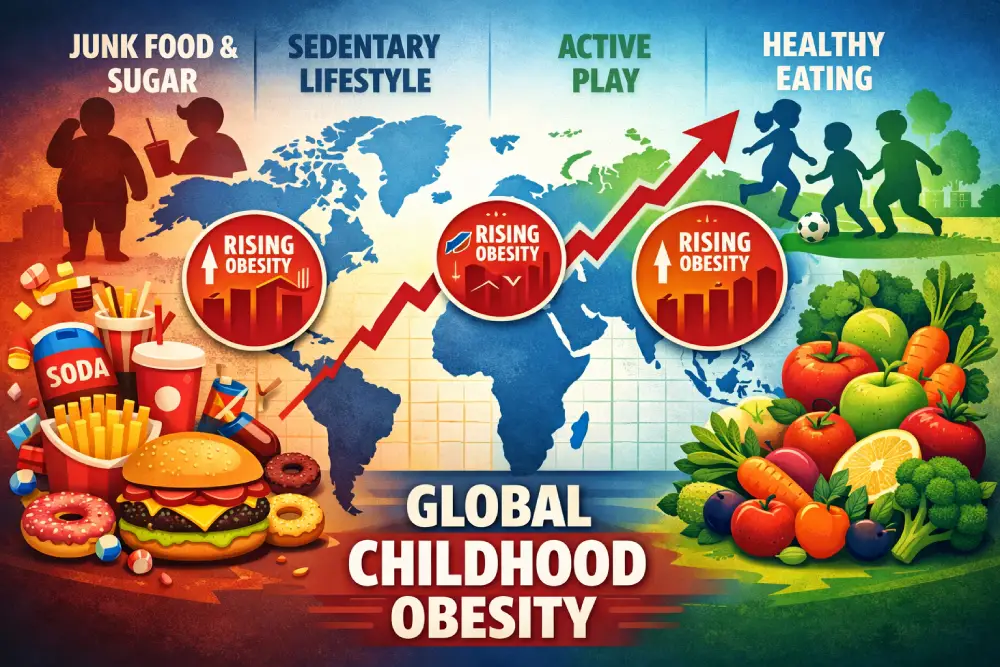
Childhood obesity is rapidly emerging as one of the most serious public health challenges of our time. The latest 2026 World Obesity Atlas report warns that without urgent global action, an unprecedented 228 million children aged 5–19 years will be living with obesity by 2040 – a staggering jump from current figures. At the same time, the United Kingdom now ranks among the worst-performing countries in Europe for childhood obesity, highlighting how widespread this crisis has become.
In this extensive blog, we’ll explore the global childhood obesity trend, why it is rising, the unique challenge faces by the UK, the health implications, root causes, regional breakdowns, and the necessary policies to prevent this looming crisis.
Global Childhood Obesity: A Growing Crisis
The Numbers That Tell the Story
According to the World Obesity Atlas 2026 released on World Obesity Day (March 4):
- In 2025, around 177 million children worldwide were living with obesity.
- By **2040, this figure is projected to rise dramatically to 228 million children aged 5–19 unless urgent preventative action is taken.
- When combined with those who are overweight (but not classified as obese), the total number of affected children globally could exceed 500 million by 2040.
This means more children will be obese than underweight for the first time in history, signaling a significant shift in global nutrition trends.
How Big Is the Global Problem?
How Big Is the Global Problem?
- It’s estimated that one in five children worldwide (around 20.7%) now falls into the overweight or obese category – up sharply from 14.6% in 2010.
- Projections suggest that if current trends continue, over 507 million school-aged children will be obese or overweight by 2040.
This rapid increase reflects major changes in diets, lifestyles, and physical activity levels around the world.
Why Childhood Obesity Is Rising
1. Dietary Shifts and Processed Foods
One of the leading drivers of worldwide obesity in children is the global spread of processed and ultra-processed foods, which are often high in sugar, salt, unhealthy fats, and calories but low in essential nutrients.
These foods:
- Are cheap and widely available
- Are heavily marketed to children
- Often replace healthier options like fresh fruits and vegetables
Sugary beverages, snacks, fast food, and pre-packaged meals have become staples in many children’s diets, contributing directly to unhealthy weight gain.
2. Sedentary Lifestyles and Screen Time
More children today spend hours:
- Watching TV
- Playing video games
- Using smartphones or tablets
This sedentary behavior displaces time spent on physical activity, significantly increasing obesity risk.
3. Urbanization and Reduced Space for Play
In many urban settings – especially in low- and middle-income countries – children often lack safe spaces to play or engage in sports, contributing to decreased activity levels and rising obesity.
4. Structural and Socioeconomic Factors
Poverty can limit access to:
- Nutritious food
- Safe environments for exercise
- Quality healthcare and education
In many countries, the poorest communities have the highest rates of obesity, reflecting a health inequality that must be addressed.
Focus on Europe: Why the UK Stands Out
While rising childhood obesity is a global phenomenon, the United Kingdom’s situation is particularly concerning in the European context.
UK’s Obesity Statistics
The 2026 report shows:
- Around 3.8 million children aged 5–19 in the UK have a high BMI, meaning they are overweight or obese.
- That’s significantly higher than comparable European nations like France and Italy.
- In 2025 approximately 11.4% of UK children aged 5–19 were obese, with 18.9% overweight (total ~30% combined).
- These rates are expected to rise to 12.4% obese and 17.3% overweight by 2040 without effective intervention.
Health Consequences in the UK
The report’s projections for the UK are alarming:
- ~370,000 British children could show early signs of cardiovascular disease by 2040 due to excess weight.
- ** ~270,000 could develop hypertension**, and
- ~114,000 could develop high blood glucose levels – strong indicators of future chronic illnesses such as type 2 diabetes and heart disease.
These trends reflect broader societal challenges that go beyond personal choices alone.
Health Impacts of Childhood Obesity
Childhood obesity isn’t just about body weight. It has far-reaching consequences that can last a lifetime.
Increased Risk of Chronic Disease
Children with obesity have a much higher likelihood of developing:
- Type 2 diabetes
- Heart disease
- Hypertension (high blood pressure)
- Certain cancers
- Metabolic disorders
Alarmingly, early signs of these diseases are increasingly being detected in children themselves, not just adults.
Psychological and Social Consequences
Beyond physical health, obesity can lead to:
- Low self-esteem
- Social stigma
- Bullying
- Poor school performance
- Emotional distress
Children struggling with weight often face psychological challenges that can affect social development and long-term mental health.
Economic Strain on Health Systems
The costs of obesity-related diseases are enormous:
- Increased healthcare spending
- Strain on pediatric and adult medical services
- Lost productivity due to disease and disability
Without preventative action, health systems around the world will struggle to cope with this growing burden.
Regional Trends Worldwide
Fastest Growth in Low- and Middle-Income Countries
One of the most concerning trends is that obesity is no longer just a problem in wealthy nations. The fastest increases are being seen in low- and middle-income countries, where infrastructure, healthcare access, and social safety nets are often weak.
High Numbers in Large Population Countries
Globally, the top contributors to childhood obesity numbers include:
- China – highest absolute number of affected children
- India – second highest and rising rapidly
- United States
- Other nations including Indonesia, Brazil, Pakistan, Mexico and Nigeria also have significant numbers of children with high BMI.
These countries contribute a large share of global childhood obesity simply due to size of population combined with rising lifestyle risk factors.
Why Global Targets Are Being Missed
In 2012, the World Health Organization (WHO) and global partners set targets to halt the rise in childhood obesity by 2025.
Unfortunately:
- Most nations, including the UK and India, are off track to meet these targets.
- The 2030 deadline has now been extended, but even that remains challenging without stronger policy actions.
Steps Needed to Reverse the Trend
1. Policy and Regulation
Experts say governments must adopt strong public health policies such as:
- Sugar taxes on sugary drinks
- Restrictions on junk food marketing to children
- Improved nutrition standards in schools
- Mandatory food labeling
- Limits on unhealthy food advertising (especially online)
2. Promoting Physical Activity
Children need access to safe spaces and programs that encourage:
- Sports participation
- Active play
- Reduced screen time
Physical education in schools must be prioritized.
3. Supportive Food Environments
This includes:
- Making nutritious food affordable and available
- Supporting breastfeeding and maternal health
- Providing nutrition education to families
4. Community and Healthcare Level Intervention
- Routine screening for obesity and related conditions
- Support programmes for high-risk children
- Community initiatives that promote healthy living
Comprehensive action must involve families, schools, local communities, health professionals, and policymakers.
Conclusion: A Global Call to Action
The childhood obesity crisis is one of the most urgent public health threats of the 21st century. With millions of children at risk of obesity and subsequent chronic diseases by 2040, the evidence makes it clear: doing nothing is not an option.
For countries like the UK, with one of the highest childhood obesity rates in Europe, the stakes couldn’t be higher. Bold policy action, community engagement, and global cooperation are needed to protect future generations.
Without such interventions, the world will face not only a health disaster but also massive economic and social fallout.
It’s time to act now.