Introduction
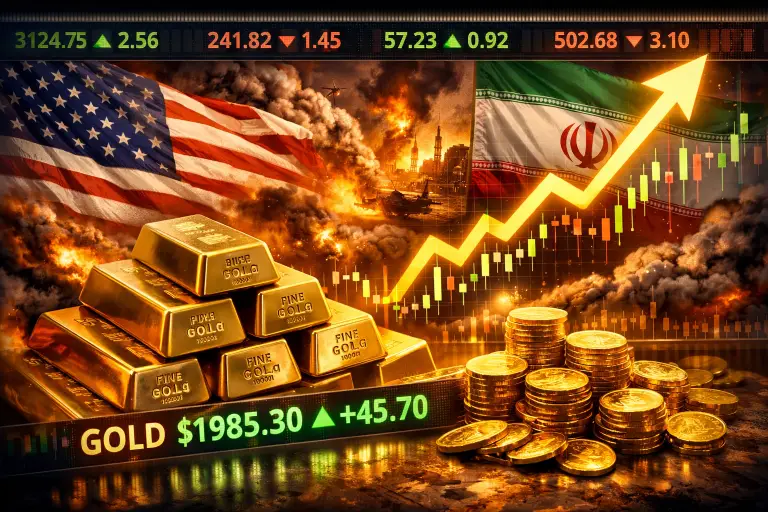
In a dramatic shift across global financial markets, gold prices in the United Arab Emirates (UAE) surged by over Dh10 per gram on March 2, 2026, as geopolitical tensions between the United States and Iran intensified in the Middle East. This spike reflects gold’s traditional role as a safe-haven asset — one that investors flock to in periods of uncertainty. Amid fears of widening conflict, disrupted trade routes, and global economic instability, bullion markets have seen renewed demand and price volatility.
In this blog, we’ll deeply explore why gold prices jumped, the broader economic and geopolitical context, how markets are reacting globally, and what it may mean for investors, consumers, and the UAE economy.
What Triggered the Gold Price Surge?
The primary driver behind the recent jump in UAE gold prices is the escalation of tensions between the United States and Iran, intensified by military strikes and retaliatory actions in the Middle East. Reports confirmed that coordinated attacks by U.S. and Israeli forces against Iran have heightened fears of a broader regional conflict — sending markets into a classic risk-off mode where investors favor assets perceived as secure, like gold.
Geopolitical Instability
Gold’s safe-haven status becomes especially evident during geopolitical crises. When major nations like the U.S. and Iran clash, investors tend to shift capital out of riskier assets — such as equities — into gold. This surge in demand provides upward pressure on bullion prices.
According to recent data, spot gold prices rose more than 1.7%, nearing levels last seen at the end of January. Futures markets also reflected robust gains, as traders priced in elevated risk premiums.
Why Gold Soared in the UAE
1. Regional Market Reaction
Gold markets in Dubai and the broader UAE experienced a sizeable uplift of over Dh10 per gram on Monday — a notable jump not seen in weeks. This movement mirrors global momentum, where gold’s appeal has strengthened amid escalating Middle East tensions.
2. Safe-Haven Demand
Gold is historically known as the ultimate security asset against uncertainty. As conflict disrupts trade routes, complicates energy supply chains, and fuels inflationary concerns, investors buy gold to preserve capital.
Recent trends show gold hitting multi-week highs, with prices rallying above the $5,300 per ounce mark. Analysts believe that if tensions persist — or escalate further — gold may test even higher levels.
3. Disruption of Gold Flows
Compounding price pressures, flights transporting physical gold — especially to and from Dubai — have been temporarily halted due to security concerns. Dubai is a major global hub for gold distribution to markets in Europe and Asia, and any disruption to this logistic network can constrain supply.
Broader Global Market Impacts
The surge in gold prices is not happening in isolation. Geopolitical risks have triggered broader ripples across commodity markets, energy prices, and global equities.
Oil Markets Under Pressure
The Middle East is a key global energy supplier. With tensions flaring near critical shipping routes like the Strait of Hormuz — a chokepoint through which nearly 20% of the world’s crude oil flows — fears of supply interruptions have pushed oil prices higher.
Analysts warn that oil could even breach the $100 per barrel level if disruptions continue, which would further exacerbate inflation and economic uncertainty. Higher energy costs typically favor commodities like gold as hedges against inflation.
Economic Significance for UAE and GCC Markets
The recent price jump in gold has several implications for the UAE economy and the broader Gulf Cooperation Council (GCC) region:
1. Wealth Preservation
In the Gulf states, gold is not only an investment asset but also a cultural staple. Households often invest in gold bullion or jewelry to preserve wealth, especially during turbulent periods.
2. Consumer Behavior
With gold prices rising, consumer demand may shift. Some buyers could delay purchases expecting future price drops; others may rush to buy before prices climb further. Jewelry retailers could see volatility in sales volumes.
3. Financial Markets Integration
Gold prices often interact with regional stock markets and currency valuations. Rising gold often accompanies dips in equities as investors reallocate capital. Local exchanges in UAE markets may reflect these sentiment shifts over coming weeks.
Gold as a Safe Haven: Historical Context
Gold’s appeal during geopolitical tensions isn’t new. From World Wars to Gulf conflicts, gold has consistently outperformed risk assets during periods of instability. Demand spikes correlate with periods of:
- Diplomatic breakdowns
- Military conflict escalation
- Economic sanctions
- Rapid inflation and currency uncertainty
In the current context, historical safe-haven behavior is playing out in real time, with gold trading near psychological price thresholds that traders monitor closely.
What Analysts Are Saying
Market experts believe that if the US–Iran conflict extends or spreads to involve other regional players, safe-haven demand for gold could intensify further.
Some projections suggest gold may break near record highs, with a scenario where prices could hover above the current resistance levels. Others warn that once the geopolitical premium fades — either through de-escalation or diplomatic resolution — prices might stabilize or correct.
That said, in the short term, analysts are positioning gold as a likely beneficiary of ongoing uncertainty.
Risks to Watch
While gold is rallying, investors should be mindful of the following risks:
1. Volatility
Rapid geopolitical developments can cause sharp swings in price — both up and down — over short time frames.
2. Oil Price Shocks
Energy market turbulence can either fuel inflation — bolstering gold demand — or trigger economic slowdowns that reduce investment appetite for commodities.
3. Central Bank Policies
Interest rates and monetary policy also influence gold. If central banks tighten rates to counter inflation, it could dampen gold’s appeal as a non-yielding asset.
What This Means for Investors
For investors, the current environment presents both opportunities and caveats:
- Short-term traders may benefit from pronounced volatility.
- Long-term holders may view gold as a hedge against sustained geopolitical risk.
- Diversified portfolios incorporating a mix of commodities, equities, and safe havens may weather uncertainty.
It’s essential to consider one’s risk tolerance, investment horizon, and broader market conditions before making strategic moves.
Consumer Guidance
For everyday consumers in the UAE and Gulf region:
- Compare prices among jewelers to ensure competitive rates.
- Consider timing purchases based on market trends.
- For those investing in bullion, consult financial advisors or market experts.
Conclusion
The recent jump of over Dh10 in UAE gold prices reflects a broader global reaction to escalating tensions between the US and Iran in the Middle East. Gold’s safe-haven appeal — combined with disruptions in transport, oil market pressures, and heightened geopolitical risk — has propelled bullion prices upward.
While the situation continues to evolve, stakeholders from consumers to global investors are closely watching how markets respond. In turbulent times, gold’s shine often grows brighter, drawing capital from risk assets into its enduring haven.