

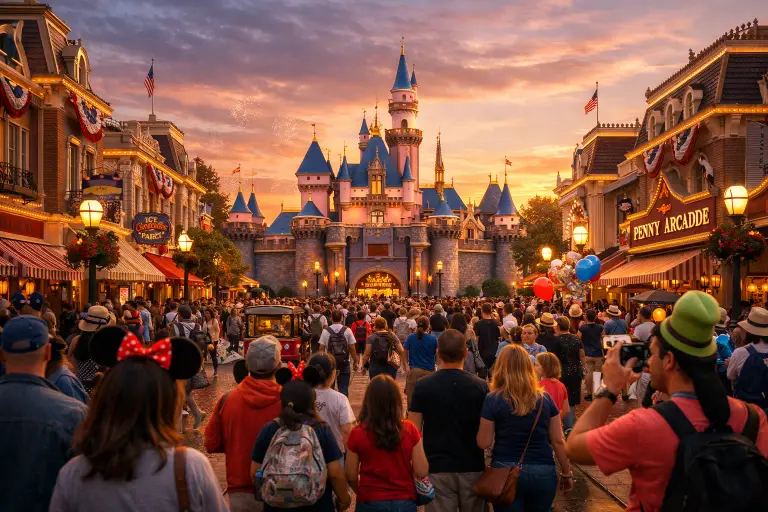
For decades, Disneyland has been known as “The Happiest Place on Earth.” Millions of visitors travel every year to experience the magic, iconic rides, and unforgettable atmosphere created by Walt Disney.
However, like any massive entertainment destination, Disneyland is also a complex business operation. While fans often dream about certain improvements or changes to make the park experience even better, some of those ideas may never become reality.
Over the years, many visitors — including lifelong Disney fans — have wished for two specific changes:
- The removal of the park reservation system
- Expanded functionality for MagicBands and other smart park technology
At first glance, both ideas sound simple and beneficial for guests. But after learning more about how Disneyland operates, it becomes clear why these changes are unlikely to happen anytime soon.
In this article, we’ll explore the reasons behind these two controversial topics and why the decisions actually make sense from Disneyland’s perspective.
The Magic and Complexity of Disneyland
Disneyland Park opened in 1955 and revolutionized the theme park industry. Unlike earlier amusement parks, Disneyland focused on storytelling, immersive environments, and family-friendly experiences.
Today, the Disneyland Resort includes:
- Disneyland Park
- Disney California Adventure
- Multiple hotels, shopping districts, and entertainment venues
Every year, millions of guests visit these parks, creating enormous logistical challenges involving crowd control, staffing, transportation, and safety.
Because of these complexities, even seemingly small operational changes can have huge financial and logistical consequences.
Change #1: Removing the Park Reservation System
One of the most controversial changes in recent Disneyland history was the introduction of the park reservation system.
What Is the Reservation System?
Under this system, guests must reserve a specific park on a specific date before entering the resort.
Even if you already purchased tickets, you cannot enter the park without a reservation.
This system was initially introduced after the COVID-19 pandemic as a way to manage crowds.
Why Many Guests Want It Removed
Many Disneyland fans dislike the reservation system because it removes spontaneity from the experience.
Before the system existed, guests could simply:
- Buy a ticket
- Arrive at the park
- Enter without advance planning
Now, visitors often need to book reservations weeks or even months in advance.
Some of the most common complaints include:
- Lack of spontaneity
- Limited availability during peak seasons
- Difficulty for annual pass holders
- Planning stress for families
Many fans believe the system makes the park feel less magical and more like a logistical challenge.
Why Disneyland Will Probably Keep Reservations
Despite guest complaints, Disneyland has strong reasons to keep the system.
1. Better Staffing and Operations
Knowing exactly how many guests will enter the park allows Disney to schedule the right number of employees.
Without reservations, Disney might face:
- Understaffing on busy days
- Overstaffing on slow days
Both situations can hurt the guest experience and increase costs.
Reservations help Disneyland plan everything from ride operations to restaurant staffing.
2. Balanced Crowd Distribution
Another major benefit of reservations is crowd balancing.
Historically, Disneyland experienced extremely crowded weekends and relatively quiet weekdays.
Now, when weekend reservations sell out, many visitors choose weekdays instead.
This spreads attendance across the week, making the experience more consistent for everyone.
3. Crowd Control During Peak Seasons
Crowd levels at Disneyland can become overwhelming during:
- Spring break
- Summer vacations
- Holidays
- Special events
Reservations help Disney prevent the park from exceeding comfortable capacity levels.
Without this system, overcrowding could become much worse.
Change #2: Expanding MagicBand Technology
Another change many Disneyland fans want involves MagicBand technology.
MagicBands are wearable smart wristbands used in Disney parks for various functions.
They allow guests to:
- Enter parks
- Access hotel rooms
- Pay for food and merchandise
- Use ride reservations
At Walt Disney World Resort, MagicBands are deeply integrated into the entire park ecosystem.
But at Disneyland, their functionality is far more limited.
Why Fans Want More MagicBand Features
Disney fans love the convenience of MagicBands and want them to be more useful at Disneyland.
Ideally, guests would like to use them for:
- Hotel room keys
- Payments
- Park entry
- Ride reservations
- Photo services
This would create a seamless digital experience similar to Walt Disney World.
Why Disneyland Hasn’t Fully Adopted Them
The reason comes down to simple economics.
Unlike Walt Disney World, Disneyland has very few on-site hotels.
The resort currently has only three official hotels, meaning only a small percentage of guests stay on property.
Because of this, only about 7% of Disneyland visitors stay in Disney-owned hotels, compared to roughly 40% at Walt Disney World.
The Financial Reality
For MagicBands to function as hotel keys and full-service devices, Disney would need to invest heavily in:
- Infrastructure upgrades
- New technology systems
- Hotel integrations
But with such a small percentage of guests staying on property, the return on investment would be much smaller than at Walt Disney World.
Simply put, the numbers don’t justify the cost.
The Bigger Challenge: Managing Massive Crowds
Crowd management remains one of Disneyland’s biggest challenges.
Even with reservations, the park frequently experiences:
- Long ride wait times
- Packed walkways
- Sold-out reservation dates
During peak travel periods, reservation slots can disappear quickly due to massive demand.
This demand shows just how popular Disneyland remains — even with new restrictions and planning requirements.
Disneyland’s Constant Evolution
Although some changes may never happen, Disneyland is always evolving.
Recent updates and improvements include:
- New attractions
- Technology upgrades
- Entertainment shows
- Dining experiences
For example, Disneyland has explored adjusting park hopping rules, allowing guests to move between parks more freely during the day.
These smaller adjustments often help improve the guest experience without disrupting the park’s operational balance.
The Balance Between Magic and Business
Disneyland exists at the intersection of storytelling and business strategy.
Every decision must balance:
- Guest satisfaction
- Operational efficiency
- Financial sustainability
- Safety and crowd management
While some fans dream of a more spontaneous, technology-driven park experience, the reality is that Disneyland must operate at a massive scale.
Running a theme park that hosts millions of guests annually requires careful planning and sometimes unpopular decisions.
Even though these two changes seem unlikely right now, nothing at Disney stays the same forever.
Possible future scenarios include:
- Expanded Disneyland Resort hotels
- New digital technology investments
- Changes to reservation policies
- New park expansion projects
If the economics change, Disney could revisit these ideas.
After all, innovation has always been part of the Disney philosophy.
Final Thoughts
Disneyland has always been a place where imagination comes to life. But behind the magic lies a complex operational machine that must handle millions of visitors every year.
While many fans wish for the removal of the reservation system or expanded MagicBand features, the reasons they haven’t happened yet are surprisingly logical.
Reservations help Disneyland manage crowds and staffing efficiently, while limited hotel capacity makes large-scale MagicBand investments difficult to justify.
Understanding these realities doesn’t make the wishes disappear — but it does help fans appreciate the complex decisions that keep the magic running smoothly.
And who knows? One day, these changes might still arrive.
After all, as Walt Disney famously believed, Disneyland will never be completed — it will continue to grow as long as there is imagination left in the world.