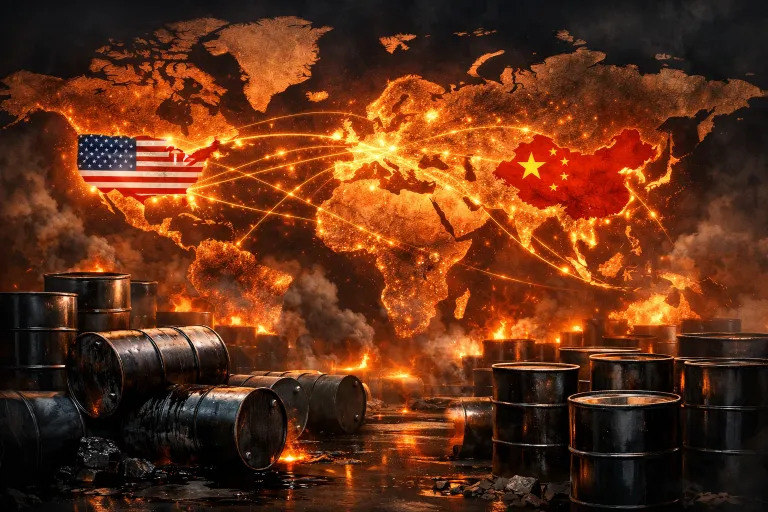
The world’s energy markets are once again under pressure. Rising geopolitical tensions, supply disruptions, and economic uncertainty have pushed oil prices into volatile territory. As the United States attempts to stabilize global energy markets, a surprising dynamic is emerging: former U.S. President Donald Trump may need cooperation from one of America’s biggest rivals — China.
However, China has its own economic priorities and geopolitical strategies, making cooperation far from guaranteed.
The question now facing global policymakers and energy analysts is simple but critical: Can the United States solve the global oil crisis without China’s support?
In this article, we explore the roots of the oil crisis, why China holds enormous influence over the global energy system, and why Trump’s strategy could face major obstacles.
Understanding the Global Oil Crisis
What Is Causing the Oil Market Turmoil?
The current instability in oil markets is the result of several overlapping factors:
1. Geopolitical Conflicts
Ongoing conflicts and political tensions have disrupted supply chains. Energy-producing regions remain unstable, creating uncertainty in global markets.
2. OPEC Production Decisions
The oil alliance led by OPEC and OPEC+ has limited production to maintain higher oil prices. These supply cuts significantly impact global availability.
3. Sanctions and Trade Restrictions
Western sanctions against countries like Russia have reshaped global oil trade routes, pushing oil flows toward Asia and increasing logistical complexity.
4. Post-Pandemic Demand Surge
Global economies rebounded faster than expected after COVID-19, driving higher energy consumption and increasing pressure on supply.
Together, these forces have created a fragile oil market where prices can swing dramatically.
Why China Holds the Key to the Oil Market
The World’s Largest Energy Importer
China is currently the largest importer of crude oil in the world. Its decisions about buying, storing, or reducing oil imports have immediate effects on global prices.
Key reasons China matters include:
- Massive energy consumption from industrial growth
- Strategic oil reserves capable of influencing supply
- Control over refining capacity in Asia
- Strong trading ties with major oil exporters
If China decides to increase purchases, oil prices could rise. If it reduces demand, prices may fall.
That makes Beijing a powerful player in global energy stability.
Trump’s Strategy to Stabilize Oil Prices
A Complex Diplomatic Challenge
During his presidency, Donald Trump repeatedly intervened in energy markets to protect American producers and maintain economic stability.
His strategy typically involved three key actions:
1. Negotiating With Oil Producers
Trump previously pressured oil producers like Saudi Arabia to adjust production levels in order to stabilize prices.
2. Leveraging U.S. Strategic Petroleum Reserves
The United States has one of the world’s largest emergency oil reserves, allowing temporary supply boosts.
3. Influencing Global Demand
This is where China becomes crucial.
If China coordinates with the United States on energy demand and trade, the two countries could significantly influence global oil prices.
But that cooperation is far from guaranteed.
Why China Is Unlikely to Cooperate
Strategic Rivalry With the United States
Relations between the United States and China have grown increasingly tense.
Key issues include:
- Trade disputes
- Technology competition
- Military tensions in the Asia-Pacific
- Conflicting economic priorities
China may see the oil crisis not as a problem to solve for the United States, but as an opportunity to strengthen its own geopolitical leverage.
China’s Energy Strategy Is Different
China’s energy policy focuses on long-term stability rather than short-term price control.
Beijing has been:
- Building massive oil stockpiles
- Expanding renewable energy
- Signing long-term supply contracts with oil exporters
- Increasing investments in energy infrastructure across Asia
This strategy reduces China’s incentive to intervene in the global market to help Washington.
The Role of OPEC and Oil-Producing Nations
Even if the United States and China cooperate, global oil prices are still heavily influenced by producers.
The most powerful group remains OPEC, which includes major exporters like Saudi Arabia.
When combined with partners such as Russia under the OPEC+ framework, these countries control roughly 40% of global oil supply.
Their production decisions can dramatically affect global prices.
Economic Impact of the Oil Crisis
The consequences of rising oil prices extend far beyond energy markets.
1. Higher Inflation
Oil prices influence transportation, manufacturing, and agriculture. When energy costs rise, consumer prices follow.
2. Slower Economic Growth
Businesses facing higher operating costs may reduce investment or hiring.
3. Political Pressure on Governments
Fuel prices often become a major political issue, especially during elections.
This is why global leaders closely monitor oil market fluctuations.
How the United States Could Respond Without China
If China refuses to cooperate, the United States still has several options.
1. Increase Domestic Oil Production
The U.S. remains one of the world’s largest oil producers thanks to shale extraction.
Expanding domestic production could offset supply shortages.
2. Strengthen Alliances With Energy Producers
Washington could deepen energy cooperation with countries such as:
- Canada
- Saudi Arabia
- Brazil
These partnerships could stabilize supply chains.
3. Accelerate the Energy Transition
Investing in renewable energy would reduce dependence on global oil markets.
This approach aligns with long-term climate goals.
The Geopolitical Stakes of the Oil Crisis
The current situation highlights a broader reality: energy markets are deeply tied to geopolitics.
Oil is not just a commodity — it is a strategic tool used by governments to influence global power.
For decades, energy diplomacy has shaped international relations, and the current crisis is no exception.
Whether cooperation or competition dominates will determine how quickly markets stabilize.
What Happens Next?
The future of the global oil market depends on several key factors:
- Economic growth in China
- Production decisions by OPEC+
- U.S. domestic energy policy
- Geopolitical stability in major oil regions
If these elements align, oil markets could stabilize.
If not, volatility may continue.
Conclusion: A Delicate Balance of Power
The global oil crisis reveals how interconnected the world’s energy systems have become.
While Donald Trump may benefit from cooperation with China, geopolitical realities make such collaboration uncertain.
Energy markets are influenced by politics, economics, and strategic interests — and those interests do not always align.
As the world watches the evolving relationship between Washington and Beijing, one thing is clear:
The future of global energy stability may depend on whether rivals can find common ground.
Until then, the oil market remains a high-stakes chessboard where every move matters.