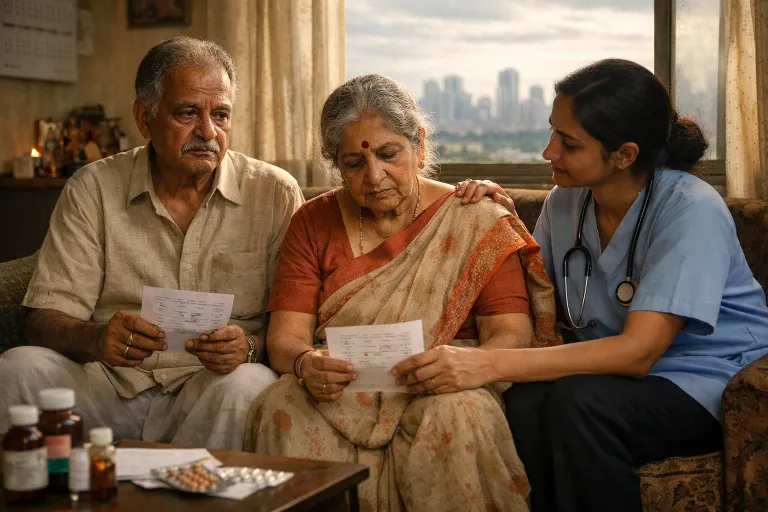
India is undergoing a profound demographic shift. With millions of citizens entering their senior years, the country’s healthcare and social systems face a new challenge: how to care for an ageing population with dignity and accessibility. While government policies and healthcare frameworks often emphasize home-based elder care, the reality across much of the country tells a different story.
For many elderly Indians, care that was supposed to reach their homes remains out of reach. Instead, families shoulder the burden—physically, emotionally, and financially. This blog explores the growing elder care crisis in India, why home-based care systems have struggled to reach households, and how emerging elder care platforms and services are beginning to bridge the gap.
The Rising Ageing Population in India
India is no longer a “young nation” alone. Its population is ageing rapidly.
According to demographic studies, India had about 149 million people aged 60 and above in 2022, representing around 10.5% of the population. By 2050, that number is projected to reach over 20% of the population.
This demographic shift is often referred to as the “Silver Tsunami.”
Several factors contribute to this trend:
- Increased life expectancy
- Improved healthcare
- Declining birth rates
- Urban migration separating families
As a result, the number of elderly citizens requiring long-term care, medical support, and emotional companionship is rising quickly.
However, the systems designed to support them have not expanded at the same pace.
The Promise of Home-Based Elder Care
Healthcare experts worldwide emphasize the importance of home-based care for older adults.
In India, national health frameworks such as the National Programme for Palliative Care (NPPC) aim to bring medical care directly into people’s homes through community health workers and primary healthcare networks.
The idea is simple but powerful:
- Reduce hospital visits
- Provide comfort in familiar surroundings
- Offer support to families caring for elderly members
- Improve quality of life for patients with chronic illness
Home-based elder care typically includes:
- Nursing visits
- Medication monitoring
- Physiotherapy
- Chronic disease management
- Palliative care
- Caregiver guidance
On paper, this model is ideal.
But implementation has been inconsistent across most of India.
The Reality: Why Elder Care Hasn’t Reached Most Homes
Despite policy frameworks, many elderly Indians still struggle to access professional care services.
1. Limited Reach of Home Healthcare Programs
Government data shows that home-based palliative care services remain uneven across states.
For example:
- Kerala reported 650,000 home visits within eight months in 2025
- Maharashtra recorded 167,000 visits
- But states like Uttar Pradesh and Bihar provided services in only a small number of districts.
These figures highlight a stark inequality in service delivery.
Millions of seniors who need home-based care simply do not receive it.
2. Shortage of Geriatric Specialists
India faces a severe shortage of professionals trained in elder care.
Estimates suggest:
- Fewer than 5,000 geriatricians serve a population exceeding 140 million elderly citizens.
- This shortage affects every aspect of elder care, including:
- Diagnosis of age-related diseases
- Mental health support
- Rehabilitation services
- Chronic disease management
Without enough specialists, home-based care programs cannot scale effectively.
3. Families Carry the Burden
When formal care systems fail, families become the default caregivers.
In India’s cultural tradition, caring for ageing parents is often seen as a moral responsibility. But changing social structures are making this increasingly difficult.
Recent data suggests:
- Around 30 million elderly Indians live alone or only with another elderly person.
Urban migration plays a major role.
Children move to different cities—or even abroad—for work, leaving elderly parents without daily support.
In such cases, caregiving becomes fragmented and stressful.
4. Financial Barriers
Elder care can be expensive.
Many elderly individuals require ongoing treatments for conditions such as:
- Diabetes
- Hypertension
- Arthritis
- Dementia
Research shows that 75% of elderly people suffer from chronic illnesses, making regular healthcare essential.
However:
- Health insurance coverage remains limited
- Home nursing services are costly
- Private elder care providers are concentrated in big cities
For middle-class and lower-income families, professional elder care may simply be unaffordable.
5. Lack of Infrastructure
India’s institutional elder care system remains small.
For example:
- Only about 696 government-supported senior citizen homes exist across the country.
Considering India’s elderly population exceeds 150 million, this capacity is extremely limited.
Many seniors therefore rely solely on family care or informal helpers.
Health Challenges Faced by India’s Elderly
Ageing brings complex health needs that require continuous monitoring.
Studies show that:
- 27% of elderly Indians suffer from multiple chronic diseases simultaneously.
Common conditions include:
1. Chronic Diseases
Hypertension, diabetes, heart disease, and arthritis are widespread among older adults.
2. Mobility Issues
Age-related mobility challenges often require physiotherapy or home assistance.
3. Mental Health Problems
Loneliness, depression, and cognitive decline are increasing concerns.
4. Emergency Health Risks
Falls, strokes, and sudden medical events require rapid response systems.
Without professional elder care support, these conditions can become life-threatening.
The Growing Elder Care Industry in India
Despite these challenges, the elder care industry is expanding rapidly.
The Indian elder care market is expected to reach ₹30,000 crore by 2025, driven by growing demand for services such as home healthcare, assisted living, and remote monitoring.
At the same time, the broader “silver economy” is projected to grow into a $30–50 billion market over the next decade.
This growth is fueled by:
- Ageing demographics
- Technology-driven healthcare
- NRI families seeking remote caregiving support
As demand grows, new elder care platforms are emerging to fill the gap left by traditional systems.
Technology Is Transforming Elder Care
Technology is becoming a key enabler of home-based elder care.
New solutions include:
Telemedicine
Online consultations allow elderly patients to connect with doctors from home.
Remote Health Monitoring
Devices track:
- Heart rate
- Blood pressure
- Oxygen levels
- Sleep patterns
Emergency Alert Systems
Smart wearables can detect falls and alert caregivers instantly.
Digital Care Platforms
Apps coordinate caregivers, doctors, medication reminders, and emergency services.
These innovations are helping extend healthcare beyond hospitals into homes.
Why Professional Elder Care Services Matter
Professional elder care services provide structured support that families alone may struggle to deliver.
Key benefits include:
1. Medical Expertise
Trained nurses and caregivers manage medications, treatments, and health monitoring.
2. Safety and Supervision
Professional caregivers reduce risks of falls, injuries, and emergencies.
3. Emotional Support
Loneliness is a major problem among elderly people living alone. Companionship services help address this.
4. Peace of Mind for Families
Children living far away can ensure their parents receive consistent care.
This is why elder care platforms and services are gaining popularity.
How Elder Care Platforms Are Bridging the Gap
Several modern elder care platforms now offer comprehensive services, including:
- Home nursing
- Doctor visits
- Physiotherapy
- Emergency response
- Companion care
- Medicine delivery
Many platforms operate through subscription models, making services more accessible and organized.
These services are particularly valuable for:
- Working professionals
- NRIs with ageing parents in India
- Families managing chronic illnesses
- Seniors living alon
The Future of Elder Care in India
India stands at a crucial crossroads in elder care.
With the elderly population expected to double in the coming decades, the need for scalable solutions is urgent.
Experts suggest several steps forward:
Expand Home Healthcare Networks
Government programs must invest more in community healthcare workers and home visits.
Train More Geriatric Professionals
Medical education should prioritize geriatric medicine.
Improve Insurance Coverage
Insurance plans should include home healthcare services.
Encourage Private Innovation
Startups and digital platforms can accelerate access to elder care services.
Build Age-Friendly Communities
Cities and neighborhoods must adapt to support senior citizens.
If these changes happen, elder care can truly reach homes across India.
Conclusion
Elder care was meant to reach homes in India—but for millions of seniors, that promise remains unfulfilled.
Limited infrastructure, shortages of trained professionals, financial barriers, and changing family structures have created a gap between policy and reality.
Yet there is hope.
The rise of technology-enabled elder care platforms and home healthcare services is beginning to transform how families care for ageing loved ones.
By combining innovation, compassion, and policy reform, India can create a future where every senior citizen receives the care, dignity, and respect they deserve—right in the comfort of their home.