Introduction
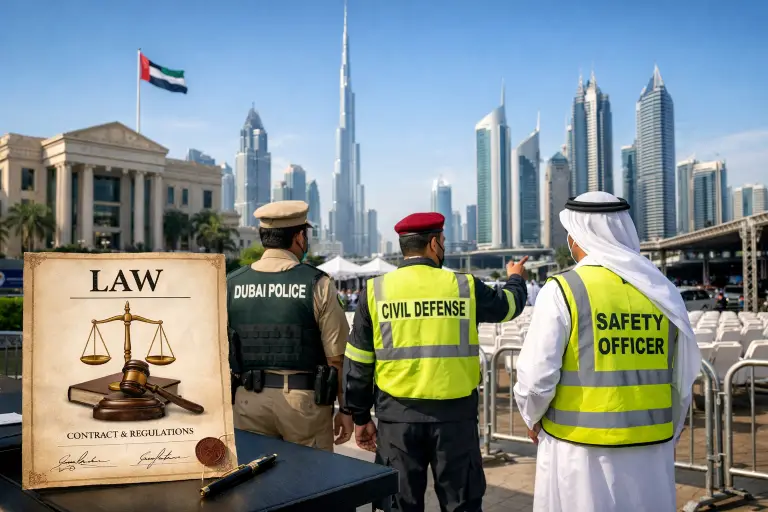
Dubai has long been known as one of the safest and most well-organized cities in the world. In order to maintain this reputation while the emirate continues to grow rapidly, the government has introduced a new and comprehensive public safety law. The legislation, issued by Sheikh Mohammed bin Rashid Al Maktoum, aims to strengthen safety standards across buildings, public spaces, events, and recreational areas.
The new law — officially called Law No. (2) of 2026 — introduces strict rules and heavy penalties for individuals or businesses that fail to comply with safety regulations. Violators may face fines ranging from Dh500 to Dh1 million, and repeat offenders could be penalized with fines reaching Dh2 million.
The move reflects Dubai’s commitment to protecting residents, tourists, and property as the city expands as a global tourism, business, and entertainment hub.
In this article, we will explore the details of the new safety law, the penalties involved, why the law was introduced, and what it means for businesses, residents, and visitors in Dubai.
Understanding Dubai’s New Public Safety Law
What Is Law No. (2) of 2026?
Dubai’s new safety legislation establishes a comprehensive framework for public safety across the emirate. The law covers a wide range of areas including:
- Public events and gatherings
- Commercial and residential buildings
- Beaches and recreational facilities
- Entertainment venues
- Public infrastructure and utilities
The goal is to ensure that all facilities and activities within the city adhere to strict safety standards. Authorities want to reduce risks associated with overcrowding, poorly maintained infrastructure, and unsafe practices.
This law also modernizes older regulations and replaces outdated safety rules that were previously in place.
Why Dubai Introduced the New Safety Law
Rapid Growth of the Emirate
Over the past two decades, Dubai has transformed into one of the world’s most dynamic cities. Millions of tourists visit the city every year, and the population continues to grow due to business opportunities and global migration.
With such rapid expansion comes new challenges related to:
- Public safety
- Crowd management
- Infrastructure maintenance
- Event management
- Environmental health
Authorities recognized that existing regulations needed to evolve to meet these challenges.
Protecting Residents and Tourists
Dubai attracts millions of visitors annually for tourism, conferences, exhibitions, and major events. Large gatherings increase the risk of accidents if strict safety procedures are not followed.
The new law ensures that venues hosting events must comply with safety guidelines before receiving approval to operate.
Strengthening Global Reputation
Dubai’s leadership has consistently prioritized safety and quality of life as key components of the emirate’s development strategy.
By implementing tougher safety regulations, Dubai aims to:
- Maintain its reputation as a safe global destination
- Protect investors and businesses
- Improve public confidence in infrastructure and services
Key Features of the New Safety Law
1. Strict Safety Requirements for Public Venues
One of the most important aspects of the legislation is the regulation of public venues and event spaces.
Under the law, organizers must ensure:
- Proper lighting and ventilation
- Clearly marked emergency exits
- Adequate crowd management systems
- Fire safety equipment
- Emergency evacuation plans
- Trained safety personnel
Failure to comply with these requirements could result in severe penalties.
2. Regulation of Products and Equipment
The law also targets unsafe products that could endanger public health.
Businesses are prohibited from selling or using items that do not meet safety standards. Any products designed for public use must include clear safety instructions in both Arabic and English.
This applies to:
- Entertainment equipment
- Recreational tools
- Public-use devices
- Educational products
Authorities want to ensure that consumers are fully informed about how to use these products safely.
3. Control Over Hazardous Activities
Another important part of the law focuses on activities that may pose risks to public safety.
For example, the legislation prohibits:
- Handling hazardous materials without authorization
- Interfering with sewage systems or storm drains
- Placing dangerous materials in waste containers
- Tampering with public infrastructure
Such activities could lead to serious accidents or environmental damage.
Fines and Penalties Under the New Law
Basic Fine Structure
The new law introduces a tiered penalty system.
Violations may result in fines ranging from:
- Dh500 (approximately $136)
- Dh1,000,000 (around $270,000)
The amount depends on the severity of the violation.
Repeat Violations
For repeat offenses within one year, the penalty can double to Dh2 million, making it one of the strictest safety laws in the region.
This heavy financial penalty is intended to discourage negligence and ensure that organizations take safety regulations seriously.
Enforcement and Authorities
The responsibility for implementing the law will fall primarily on Dubai Municipality and other authorized government agencies.
Officials have the power to:
- Inspect facilities and venues
- Record violations
- Issue penalties
- Refer serious cases to the police
Dubai’s enforcement agencies will monitor compliance closely to ensure that the new regulations are followed.
Rights to Appeal Against Penalties
The law also ensures fairness by providing a legal process for appeals.
Individuals or businesses that receive penalties have the right to:
- Submit a written appeal within 10 working days.
- Have the case reviewed by a special committee.
- Receive a decision within 30 days.
The committee’s decision will be final.
Compliance Timeline
To allow businesses and institutions time to adjust, the government has provided a transition period.
Organizations must comply with the law within two years from its implementation.
If necessary, authorities may grant an additional extension depending on circumstances.
This timeline ensures that companies have enough time to upgrade infrastructure, train staff, and implement new safety procedures.
Impact on Businesses in Dubai
Higher Safety Standards
Businesses operating in Dubai will need to adopt stricter safety practices.
This may involve:
- Installing advanced safety equipment
- Conducting regular safety audits
- Training employees in emergency response
- Updating safety documentation
Increased Operational Responsibility
The law clearly places responsibility on business owners and operators.
Authorities will not be liable for damages caused by failure to follow safety regulations. Instead, the responsibility will fall entirely on the property owner or operator.
What the Law Means for Residents
For residents, the new safety law offers several benefits:
- Safer public spaces
- Better event management
- Improved infrastructure maintenance
- Reduced risk of accidents
Residents will also be required to follow safety instructions when visiting public venues or participating in events.
Public cooperation is considered essential to the success of the legislation.
Benefits for Tourists
Tourism is one of Dubai’s most important industries. The new law is expected to enhance the visitor experience by ensuring that:
- Hotels and attractions follow strict safety guidelines
- Public beaches and recreation areas are well regulated
- Large events operate with proper safety measures
- This will help reinforce Dubai’s image as a secure and world-class travel destination.
Dubai’s Long-Term Vision for Safety
Dubai’s leadership has consistently emphasized safety as a key pillar of development.
The introduction of the new safety law aligns with several broader goals:
- Smart city development
- Sustainable urban planning
- Enhanced emergency preparedness
- Global competitiveness
By enforcing strong safety regulations, the government aims to create an environment where residents and businesses can thrive without compromising public welfare.
Challenges and Implementation
While the law is expected to bring significant benefits, implementation may present some challenges.
Compliance Costs
Businesses may need to invest heavily in:
- Safety equipment
- Staff training
- Infrastructure upgrades
Small businesses may find these costs difficult initially.
Public Awareness
Authorities will need to conduct awareness campaigns so that residents and businesses fully understand the new regulations.
Without proper awareness, compliance could be slow.
Global Comparison
Many global cities have introduced similar safety regulations to protect citizens and visitors.
Dubai’s law stands out because of:
- Extremely high fines for violations
- Comprehensive coverage of public spaces
- Strict enforcement mechanisms
These measures demonstrate the emirate’s determination to maintain its status as one of the safest cities in the world.
Conclusion
Dubai’s new public safety law marks a major step forward in strengthening the emirate’s regulatory framework. By introducing strict safety standards and significant penalties for violations, the government is sending a clear message: public safety is a top priority.
The legislation will require businesses, residents, and event organizers to adopt more responsible practices. However, the benefits of the law — including safer public spaces, improved infrastructure, and stronger global confidence — are expected to outweigh the challenges.
As Dubai continues to grow into a global powerhouse for tourism, business, and innovation, strong safety regulations like Law No. (2) of 2026 will play a crucial role in ensuring that development remains safe, sustainable, and secure for everyone.