
In a world where artificial intelligence is rapidly transforming industries, a recent statement by Aravind Srinivas, CEO of Perplexity AI, has ignited a massive global debate.
His controversial remark—suggesting that layoffs driven by AI are acceptable because “people hate their jobs anyway”—has triggered strong reactions from professionals, industry leaders, and everyday workers.
But is there any truth behind this claim? Or is it an oversimplification of a much deeper issue?
Let’s break it down.
The Statement That Sparked the Firestorm
During a discussion around artificial intelligence and the future of work, Aravind Srinivas made a statement that many interpreted as dismissive of workers’ struggles.
The idea that job dissatisfaction justifies layoffs didn’t sit well with the public. Critics quickly pointed out that while some employees may feel disengaged, that doesn’t mean they want to lose their livelihood.
Social media platforms were flooded with reactions—ranging from agreement to outright outrage.
Understanding the Rise of AI in the Workplace
AI is no longer just a futuristic concept—it’s here, and it’s changing everything.
Companies across sectors are integrating AI tools to:
- Automate repetitive tasks
- Improve efficiency
- Reduce operational costs
- Enhance decision-making
Startups like Perplexity AI are leading the charge, offering AI-powered search solutions that challenge traditional engines.
But with innovation comes disruption.
The Reality of AI-Driven Layoffs
Let’s be clear—AI is already replacing certain jobs.
From customer service chatbots to automated data analysis tools, many roles are becoming redundant. However, the impact is not uniform.
Jobs Most at Risk:
- Data entry roles
- Basic customer support
- Routine administrative tasks
Jobs That Are Evolving:
- Marketing and content creation
- Software development
- Strategic decision-making roles
The concern isn’t just about losing jobs—it’s about the speed at which this transformation is happening.
Do People Really Hate Their Jobs?
This is the core of Srinivas’ argument—and also its weakest point.
While studies show that a significant portion of employees feel disengaged, it’s misleading to conclude that people want to be unemployed.
Key Reasons People Feel Unhappy at Work:
- Lack of growth opportunities
- Poor management
- Work-life imbalance
- Low compensation
But dissatisfaction doesn’t equal dispensability.
Work provides:
- Financial stability
- Identity and purpose
- Social connection
Losing a job can have serious emotional and economic consequences.
Public Reaction: A Divided Opinion
The internet had a lot to say.
Critics Argued:
- The comment was insensitive
- It ignored economic realities
- It normalized job loss
Supporters Said:
- Many jobs are indeed unfulfilling
- AI could free people from monotonous work
- Society needs to rethink employment models
This divide reflects a broader tension between technological progress and human impact.
The Role of Tech Leaders in Shaping Narratives
As the CEO of Perplexity AI, Aravind Srinivas holds significant influence.
Statements from tech leaders don’t just reflect opinions—they shape industry direction and public perception.
That’s why messaging matters.
Insensitive or poorly framed comments can:
- Damage brand reputation
- Create fear among employees
- Spark backlash from users and investors
AI and the Future of Work: Opportunity or Threat?
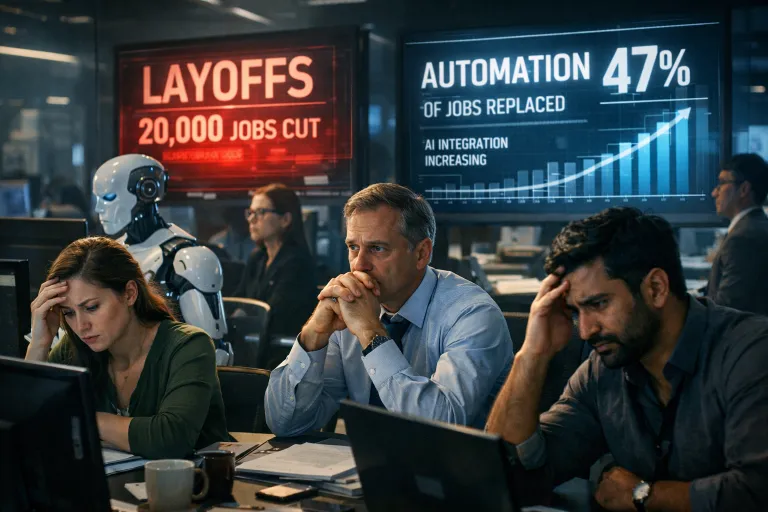
AI is not inherently good or bad—it’s how we use it that matters.
Opportunities:
- Creation of new job categories
- Increased productivity
- Better work-life balance
Threats:
- Job displacement
- Skill gaps
- Economic inequality
The challenge lies in managing this transition responsibly.
The Need for Reskilling and Upskilling
If AI is the future, then adaptability is the key to survival.
Governments, companies, and individuals must invest in:
- Digital skills
- Critical thinking
- Creativity
- Emotional intelligence
Workers need to prepare for roles that don’t even exist yet.
Ethical Responsibility of AI Companies
Companies like Perplexity AI must go beyond innovation.
They need to:
- Ensure ethical AI deployment
- Support displaced workers
- Promote inclusive growth
Ignoring the human cost of automation is not sustainable.
Lessons from the Controversy
This incident offers important takeaways:
- Words Matter – Especially from influential leaders
- AI Needs Human-Centric Policies
- Job Satisfaction Is Complex
- Layoffs Are Not Just Numbers—They Affect Lives
A Bigger Question: What Is the Future of Work?
We are at a turning point.
The traditional 9-to-5 job model may evolve into something entirely different.
Possible futures include:
- Gig-based economies
- AI-assisted roles
- Universal basic income
But one thing is clear—change is inevitable.
Final Thoughts
The controversy surrounding Aravind Srinivas highlights a critical issue in today’s AI-driven world.
While technology continues to advance, the human aspect must not be ignored.
Yes, some people may dislike their jobs—but that doesn’t mean they are ready to lose them.
The future of work should not just be efficient—it should be fair, inclusive, and humane.