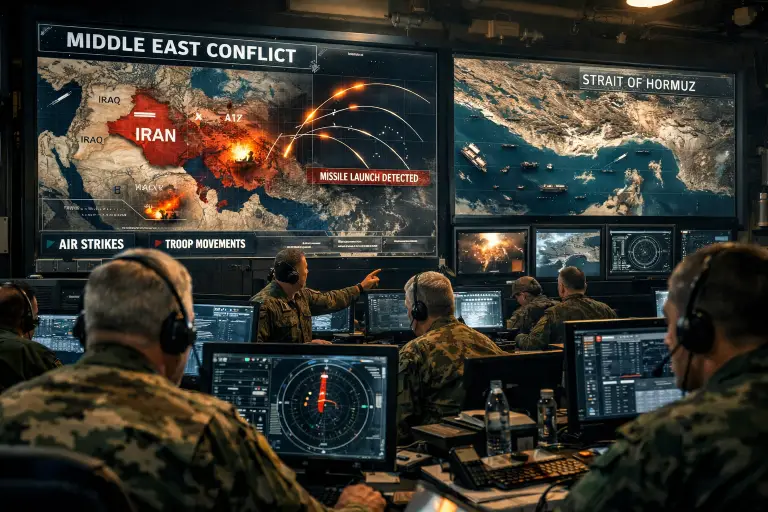
The head of CENTCOM, Brad Cooper, recently said the campaign against Iran is progressing “ahead or on plan.” The comment was made during an interview discussing the progress of U.S. military operations in the region.
According to Cooper:
- Iran has carried out over 300 attacks on civilian targets in recent weeks.
- The intensity of Iranian missile and drone attacks has declined significantly.
- The U.S. and its allies are targeting both active threats and future capabilities, including missile and drone manufacturing facilities.
This suggests that the U.S. military believes its strategy is successfully weakening Iran’s offensive capabilities.
Major Military Developments in the Conflict
Large-Scale Airstrikes on Iranian Infrastructure
Recent reports confirm that the U.S. and Israeli forces have conducted large-scale airstrikes targeting Iranian military infrastructure. These strikes include:
- Missile launch sites
- Drone manufacturing facilities
- Military command centers
- Strategic weapons factories
Israeli forces also launched a wide wave of strikes against Iranian regime infrastructure, demonstrating the coordinated nature of the campaign.
The objective of these attacks is not only to eliminate immediate threats but also to destroy Iran’s long-term military production capacity.
Iranian Retaliation and Escalation
Iran has responded with missile strikes and threats of broader retaliation across the region.
Iranian leaders have warned they could:
- Target U.S. military bases in the Middle East
- Strike energy infrastructure in Gulf countries
- Attack economic and industrial assets linked to the United State
Several Gulf nations have already reported missile alerts and interceptions, highlighting the risk of a broader regional conflict.
The Strategic Importance of the Strait of Hormuz
One of the most critical flashpoints in the conflict is the Strait of Hormuz, a narrow waterway connecting the Persian Gulf to the global ocean.
Why It Matters
- About 20% of the world’s oil supply passes through the Strait of Hormuz.
- Any disruption could cause massive global energy price spikes.
- It is vital for global trade and shipping.
The U.S. government has issued warnings and ultimatums demanding that Iran keep the strait open for international shipping.
If the strait were closed, it could trigger a global economic crisis.
The Role of Israel in the Campaign
Another key player in the conflict is Israel, which has been actively conducting strikes against Iranian targets.
Israel considers Iran one of its biggest security threats due to:
- Iran’s missile development programs
- Support for regional militant groups
- Nuclear ambitions
In the latest phase of the campaign, Israel has reportedly launched major airstrikes on Tehran and other strategic locations.
This cooperation between the U.S. and Israel has intensified the military pressure on Iran.
Humanitarian Impact of the Conflict
While military leaders focus on strategy and operations, the conflict has already caused severe humanitarian consequences.
Reports indicate:
- More than 2,500 deaths across the region
- Millions of people displaced
- Widespread damage to infrastructure and cities
Countries like Lebanon and Iran have been particularly affected.
The humanitarian crisis could worsen if the war expands further.
Global Economic Consequences
The conflict is not only a military issue—it also has major economic implications.
Rising Energy Prices
Because of tensions around the Strait of Hormuz:
- Oil prices have surged
- Shipping insurance costs have increased
- Energy markets are becoming volatile
Many economists warn that prolonged conflict could trigger global inflation and economic instability.
Supply Chain Disruptions
The Middle East is a critical hub for global trade.
Any escalation could affect:
- Maritime shipping routes
- International aviation
- Oil and gas transportation
Developing nations could be hit hardest by rising fuel prices and food costs.
Political Reactions Around the World
The conflict has triggered mixed reactions globally.
Support for the US Campaign
Some countries believe the campaign is necessary to counter Iran’s military expansion and regional influence.
Supporters argue that:
- Iran’s missile programs pose a global security threat
- Military pressure could weaken aggressive actions by Tehran
Criticism and Concerns
However, critics warn that the conflict could escalate into a full-scale regional war.
Concerns include:
- Civilian casualties
- Long-term instability
- Global economic damage
Several international organizations have called for urgent diplomatic negotiations.
Iran’s Strategy Moving Forward
Iran’s leadership has made it clear that it will not back down easily.
Possible Iranian strategies include:
- Expanding attacks on U.S. allies in the region
- Targeting international shipping routes
- Mobilizing regional proxy groups
- Cyber warfare against Western infrastructure
These tactics could prolong the conflict significantly.
Possible Future Scenarios
The next few weeks will be critical in determining how the situation unfolds.
Scenario 1: Rapid Military Victory
If the U.S. campaign continues to weaken Iran’s military capabilities, the conflict could end relatively quickly.
However, this scenario depends on:
- Successful targeting of key infrastructure
- Limited retaliation from Iran
Scenario 2: Prolonged Regional War
The conflict could expand if:
- Iran attacks Gulf states
- Regional militias join the war
- Major powers become involved
This scenario could destabilize the entire Middle East.
Scenario 3: Diplomatic Resolution
International pressure may eventually push both sides toward negotiations.
Potential diplomatic solutions could include:
- Ceasefire agreements
- Security guarantees
- New regional arms control frameworks
What This Means for Global Security
The current conflict represents one of the most dangerous geopolitical crises in recent years.
It highlights:
- The fragility of Middle Eastern stability
- The global dependence on energy routes
- The risk of major power confrontation
As military operations continue, the world is watching closely to see whether the campaign will achieve its objectives—or spark an even larger conflict.
Conclusion
The announcement that the U.S. campaign against Iran is “ahead or on plan” marks a significant moment in the ongoing conflict. While military leaders believe the strategy is working, the situation remains extremely volatile.
With rising casualties, threats to global energy supplies, and growing geopolitical tensions, the stakes could not be higher.
Whether the conflict ends through military victory, diplomatic negotiations, or prolonged warfare will shape the future of the Middle East—and potentially the global balance of power—for years to come.