Introduction
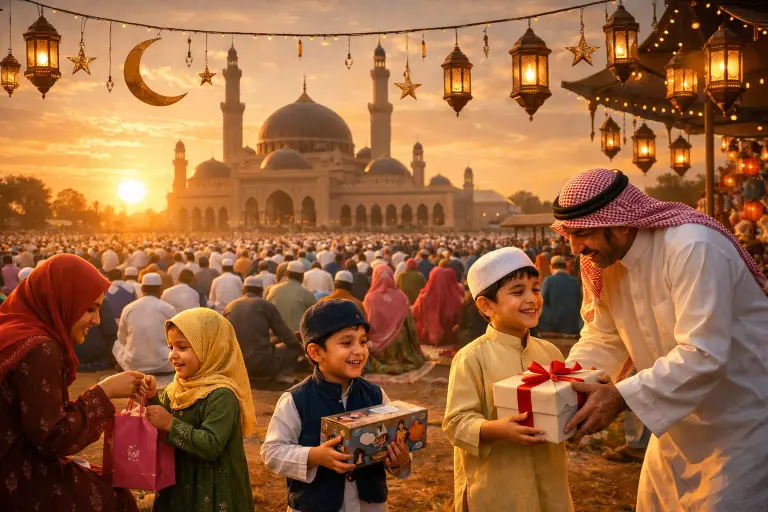
Eid al-Fitr is one of the most important festivals celebrated by Muslims around the world. It marks the joyful end of the holy month of Ramadan, during which Muslims fast from dawn to sunset, engage in prayer, charity, and spiritual reflection. The festival symbolizes gratitude, unity, generosity, and celebration after a month of devotion.
In 2026, Eid al-Fitr is expected to be celebrated around March 19–20, 2026, depending on the sighting of the crescent moon that marks the beginning of the Islamic month of Shawwal.
The festival is known as the “Festival of Breaking the Fast” because it marks the end of Ramadan fasting. Families gather, special prayers are offered, delicious food is prepared, and people exchange gifts and greetings like “Eid Mubarak.”
This blog explores everything about Eid al-Fitr 2026 — including its expected date, historical background, religious significance, traditions, celebrations across the world, food, charity, and cultural importance.
When Is Eid al-Fitr 2026?
Eid al-Fitr follows the Islamic lunar calendar, which is based on the moon’s cycle rather than the solar calendar used worldwide. Because the Islamic year is about 11 days shorter, Islamic festivals move earlier every year.
Expected Date
- Expected Eid Date: Friday, March 20, 2026
- Eid Moon Sighting: Evening of March 19, 2026
- Islamic Date: 1 Shawwal 1447 AH
The exact date depends on the sighting of the Shawwal crescent moon, so some countries may celebrate Eid on March 20, while others may observe it on March 21, 2026.
In many countries, Eid celebrations continue for two to three days, often declared as public holidays.
What Is Eid al-Fitr?
Eid al-Fitr is a religious celebration marking the end of Ramadan, the ninth month of the Islamic calendar. During Ramadan, Muslims fast every day from dawn until sunset as a form of worship and spiritual discipline.
Fasting teaches:
- Self-control
- Compassion for the less fortunate
- Spiritual purification
- Gratitude to God
Eid al-Fitr celebrates the completion of this spiritual journey. It is a day of joy, gratitude, forgiveness, and community bonding.
Historical Background of Eid al-Fitr
Eid al-Fitr was established by the Prophet Muhammad (PBUH) in the early days of Islam after the migration to Medina in 624 CE. Muslims replaced earlier celebrations with two religious festivals:
- Eid al-Fitr
- Eid al-Adha
These festivals emphasize worship, charity, and unity rather than extravagance.
Since then, Eid al-Fitr has become a global celebration observed by over 1.9 billion Muslims worldwide.
The Religious Significance of Eid al-Fitr
Eid al-Fitr carries deep spiritual meaning for Muslims.
1. Completion of Ramadan
Ramadan is a time of:
- Fasting
- Prayer
- Quran recitation
- Charity
- Self-discipline
Eid marks the successful completion of this sacred month.
2. Gratitude to Allah
Muslims celebrate Eid as a way to thank God for giving them strength to fast and worship throughout Ramadan.
3. Charity and Social Responsibility
Before the Eid prayer, Muslims must give Zakat al-Fitr, a form of charity given to the poor so that everyone can celebrate the festival.
This ensures that even the less fortunate can enjoy the day.
Key Rituals of Eid al-Fitr
1. Moon Sighting (Chand Raat)
The night before Eid is called Chand Raat, meaning “Night of the Moon.” When the crescent moon is sighted:
- Markets become lively
- People shop for clothes
- Families prepare sweets
- Women apply henna (mehndi)
It is a festive night full of excitement.
2. Eid Prayer (Salat al-Eid)
On Eid morning, Muslims gather in mosques or open grounds to perform Eid prayer.
Key aspects include:
- Special two-unit prayer
- A sermon (Khutbah)
- Community gathering
Before leaving for prayer, Muslims recite Takbir:
Allahu Akbar, Allahu Akbar, La ilaha illallah.
3. Zakat al-Fitr (Charity)
Charity is an essential part of Eid.
Muslims donate food or money to the poor before the Eid prayer so that everyone can participate in the celebration.
4. Wearing New Clothes
People wear new or clean clothes as a symbol of renewal and joy.
Traditional attire varies across cultures:
- India & Pakistan: Kurta pajama, sherwani
- Middle East: Thobe, abaya
- Indonesia & Malaysia: Baju Melayu
5. Family Gatherings
Eid is a time for:
- Visiting relatives
- Sharing meals
- Reconnecting with loved ones
- Forgiving past conflicts
Popular Eid al-Fitr Foods Around the World
Food plays a huge role in Eid celebrations.
Here are some popular dishes:
India & Pakistan
- Sheer Khurma (sweet vermicelli dessert)
- Biryani
- Kebabs
- Seviyan
Middle East
- Baklava
- Lamb dishes
Turkey
- Turkish delight
- Baklava
Indonesia
- Ketupat (rice cakes)
- Rendang
Each culture celebrates Eid with unique flavors and traditions.
The Tradition of Eidi
Children eagerly wait for Eidi, which is money or gifts given by elders during Eid.
Eidi symbolizes:
- Love and blessings
- Joy for children
- Family bonding
Eid al-Fitr Celebrations Around the World
India
In India, Eid celebrations are vibrant:
- Large congregational prayers
- Markets filled with festive shoppers
- Sweet dishes like sheer khurma
Cities like Delhi, Hyderabad, and Lucknow host huge Eid gatherings.
Saudi Arabia
Saudi Arabia celebrates Eid with:
- Grand mosque prayers
- Cultural festivals
- Fireworks and public celebrations
Turkey
In Turkey, Eid is called Ramazan Bayramı.
Traditions include:
- Visiting elders
- Kissing the hands of parents and grandparents
- Offering sweets to guests
Indonesia
Indonesia has the largest Muslim population.
Eid is called Lebaran, and people travel across the country to celebrate with family.
Eid Greetings and Wishes
Common Eid greetings include:
- Eid Mubarak – Blessed Eid
- Eid Sa’id – Happy Eid
These greetings symbolize peace, joy, and blessings.
Why Eid al-Fitr Is Important Today
In the modern world, Eid remains a powerful reminder of important values:
Community
People gather and strengthen social ties.
Charity
Helping the poor is a central element.
Gratitude
It encourages appreciation for blessings.
Spiritual Growth
Ramadan and Eid promote moral and spiritual development.
Eid al-Fitr 2026 in the Modern Digital World
Technology has changed how Eid is celebrated:
- Online Eid greetings
- Virtual family gatherings
- Social media celebrations
- Digital charity donations
Even in a digital age, the essence of Eid remains the same — compassion and unity.
Conclusion
Eid al-Fitr 2026 is expected to fall around March 19–20, 2026, marking the end of Ramadan and the beginning of Shawwal.
It is a time of joy, gratitude, and togetherness celebrated by millions of Muslims worldwide. Through prayers, charity, delicious food, and family gatherings, Eid reminds people of the values learned during Ramadan: patience, kindness, and generosity.
Whether celebrated in bustling cities or quiet villages, Eid al-Fitr continues to unite communities and spread happiness across the world.
As the festival approaches, Muslims everywhere prepare to greet one another with smiles and the timeless message:
“Eid Mubarak!”